LIKE A CHARM
I’ve been enjoying an etymology podcast lately: Words Unravelled, with Rob Watts and Jess Zafarris. He’s British and she’s American, and they both have a wonderful knowledge and love of language. Usually they start with a broad topic — e.g. nautical terms, movie words, or the origin of flower names — and the two of them riff and amuse each other around this theme for 30-40 minutes. It’s great. Right up my alley.
One particularly good episode dealt with collective nouns — words that describe a group of individuals, such as a gaggle of geese, a herd of cattle, a pack of dogs.
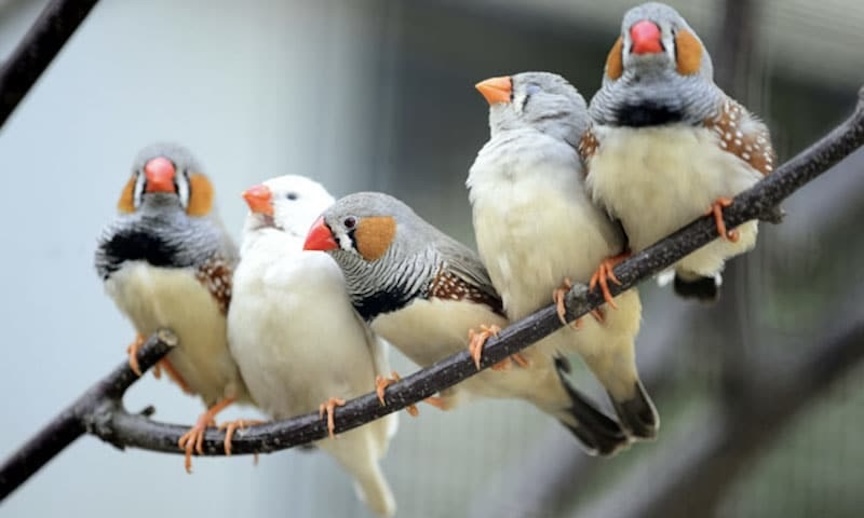
I learned that these terms were all compiled in The Book of Saint Albans, in 1486, which was written originally as a guide for medieval gentlemen on hunting, falconry, and heraldry. Apparently, the book grew quite popular amongst the English aristocracy, and it became a mark of one’s sophisticated status to know the proper names for animal groups. A pride of lions, a prickle of hedgehogs, a dazzle of zebras, and a charm of finches… You bet, I want to know all of them.
I find so much about this to be interesting and thought-provoking. The Book of Saint Albans was written, at least mostly, by a woman — Benedictine prioress Juliana Berners — which seems pretty remarkable for the 15th century. She described or invented (she did some of both, probably) many phrases that we still use today, like a swarm of bees and a litter of puppies. As well, she presented others that are now more obscure, such as a shrewdness of apes and a smack of jellyfish. Most of the thing is written in clever, rhyming verse. I was delighted to learn that both “school of fish” and “flamboyance of flamingos” have been a part of our language for over five-hundred years.
One section of the book deals with collective nouns for people. Berners introduced a diligence of messengers, a sentence of judges, a skulk of thieves, an impatience of wives, and a superfluity of nuns. Good, huh?
I really like how each of these not only says something about the people or profession delineated, but also reveals something of the person describing them. For example, dubbing a group of nuns a “superfluity” certainly suggests something pointed — perhaps how Juliana Berners felt about her own station, or a commentary on nuns’ places in the church hierarchy, or the fact that the sisterhood was often where women of noble birth found themselves when they were one of too many daughters in their family.
This led me to consider how I think about the groups of which I’m a part. I don’t have names for all of these, but I could make some up: an exuberance of actors, a ristra of New Mexicans. I can do it to bolster or to take myself down a notch — a solace of chaplains or a pomposity of preachers.
Also, how I might call groups of others: a hazard of scooter-riders… an outrage of activists… a ruin of oligarchs… a failing of politicians…
Then, inevitably, I began to wonder about the line I was drawing between me and them, between us and them. Yearning to dissolve such lines whenever and wherever I can, I realized that it does ultimately behoove me to come up with some encouraging collective nouns for all of us, together. To intentionally name us in a way that fosters belonging not just within a narrow band, but is as inclusive and inviting as possible:
A progress of humans,
A passion of participants,
A kindness of strangers,
A hope of seekers,
Are we a commitment or a futility?
A blessing or a curse?
A delight or a despair?
Sure, we can be either. We can be both. I’m definitely not suggesting this as an easy panacea.
(I feel like I always need to offer a disclaimer because I don’t want my positive message to be read as part of the problem in these terribly challenging times — a complacency of Americans, a privilege of middle-class white men. Absolutely, we need to call out a bullshit of bigots when we encounter it, every sycophancy of journalists, every insanity of cultists, a violence of ICE agents invading our communities.)
Still, there is a truism about how we can only recognize in others and in the world that which we first see in ourselves — for good and for ill. Anaïs Nin expressed this beautifully, paraphrasing the Talmud, when she wrote, “We don’t see things as they are, we see them as we are.”
I believe this can apply and transform in both directions — that what we see always reveals something of ourselves, and that deliberately choosing to see things in a particular way can change us, and in turn, ultimately, change what we’re looking at.
I can’t wait to be with you this Sunday, January 18, 10:00am at q-Staff Theater. With the divine Patty Stephens. See you there, my charm of friends. XO, Drew
©2026 Drew Groves

Related Posts