THE FOGGIEST IDEA
For a few years, now, I’ve been seeing more and more references to the Dunning-Kruger Effect, usually in articles about how we relate to facts and information in this political climate, in our age of media overload. Though I had a passing familiarity with the idea, I had never looked into it very deeply. It’s interesting.
In short, Dunning-Kruger refers to a common cognitive bias: that we humans tend to overestimate our own understanding and abilities, especially in those areas in which we have the least real knowledge or competence. It is the effect described in the old adage, “a little knowledge is a dangerous thing.” Those who are most superficially (and often inaccurately) acquainted with a subject are the ones most likely to consider themselves authorities on it. The ones who are least capable in a given area tend to be the most over-confident in their abilities.
For example, 80% of people think they are “better than average” drivers. This is, in itself, an impossibility; at least 30% of them must be wrong. Dunning and Kruger, however, went on to show that those who scored the lowest on driving tests are the most likely to believe themselves really, really good at it.
You don’t have to think about this too long before you see how such an inflated self-assessment might become a problem. Here’s a real scary example: a study was done regarding gun safety; those with the least ability and knowledge consistently considered themselves to possess the greatest expertise.
Such distortions of self-regard can be almost amusing in some contexts. And it’s tempting to poke fun at the obvious ignoramuses who proclaim themselves masters. However, it’s also important to recognize that we all fall into this mental trap. It is simply a human tendency to assume that we know much more than we do.
Most of the time, we don’t notice our blind spots, even if they’re huge gaps, even if you could drive a truck through them. When, occasionally, we find ourselves forced to confront our own ignorance, this can be uncomfortable and disorienting, so we do our best to avoid it. Sometimes, unconsciously or consciously, just to feel a little more grounded and secure and certain, we double-down on our unfounded assumptions and beliefs. And thus the blind spots get bigger and blinder.
Wisdom is discovering how precious little we know.
Which leads to an interesting flip-side of Dunning-Kruger. At the same time that we are inclined to overrate ourselves where we’re not really all that strong, we’re also prone to underrate and undervalue ourselves in the areas in which we do have real skill, knowledge, and ability.
Real growth and all learning requires that we encounter the unfathomable vastness of everything we don’t know. Because of this, progress can, strangely, feel like knowing less and less relative to the grand scheme of everything. So, then, when it comes to the stuff about which we do have some real experience and understanding, we’re more inclined to think: “Oh, well, everyone knows that… Anyone can do that… My capability isn’t that big a deal…”
In both instances — in Dunning-Kruger and its flip-side — we make false assumptions because we fail to see beyond our own limited vantage. Either we don’t know how much we don’t know, so we foolishly think we’re brilliant. Or we do know how much we don’t know, so we despairingly assume we’re inept. It’s funny how our minds work.
I’ve been wondering about how to glean some empowering sensibility out of all of this. How to work with the Dunning-Kruger effect in a positive, applied spirituality? And here’s what I’m thinking right now:
- We could try to embrace NOT-KNOWING as a truly masterful state of being. Letting “I don’t know,” be not a shameful admission, but a proud declaration. It does, in fact, put us way ahead of the curve in terms of an accurate assessment of our our abilities and understanding in any field. And it opens us up to fresh possibilities.
My broad definition of “spirituality” is: our relationships with other beings, with our own hearts and souls, and with Everything. That’s a huge subject. And clearly what any of us really knows about all this is just the teeniest drop in the boundless ocean of all knowledge. I don’t know what others are thinking and feeling most of the time — and the more I assume that I do, the more wrong I’m likely to be. None of us can know the extent of the Infinite. So the more I think that I know about God or the Universe or whatever you want to call the Totality, the more I’m likely to be kidding myself into some expertise or authority that I really don’t possess.
I can’t know what’s possible for myself, my life, and the world. Any certainty is mostly foolish and limiting, because it tends to box the future into what’s already been. So there’s that. Also, there’s this:
- Remembering that those areas in which I’m inclined to be critical of myself — when I think, “I’ll never be good enough, I’ll never get it, I’ll never understand, there’s far too much and I’m only me…” — well, these thoughts are, in themselves, an indication that I’m probably in much better shape than I think I am. We can all give ourselves a big freakin’ break. Are you aware of the vastness of your ignorance? Well done! Do you not know? Beautiful.
One key difference between those who overestimate their knowledge and abilities and those who underestimate their knowledge and abilities is: the humble and self-effacing are more likely to be able to integrate new information when it comes their way. Multiple studies have demonstrated this in terms of academic knowledge, technical skill, and interpersonal aptitude.
Those of us who are aware of our ignorance and open to it are poised for fresh understanding, for a shift in perspective, for a change of mind. We can be mentally nimble and emotionally receptive. It is a spiritual dexterity that lets us listen to others and see different perspectives. It seems clear that this positions us for more empathetic, compassionate, and caring relationships all around.
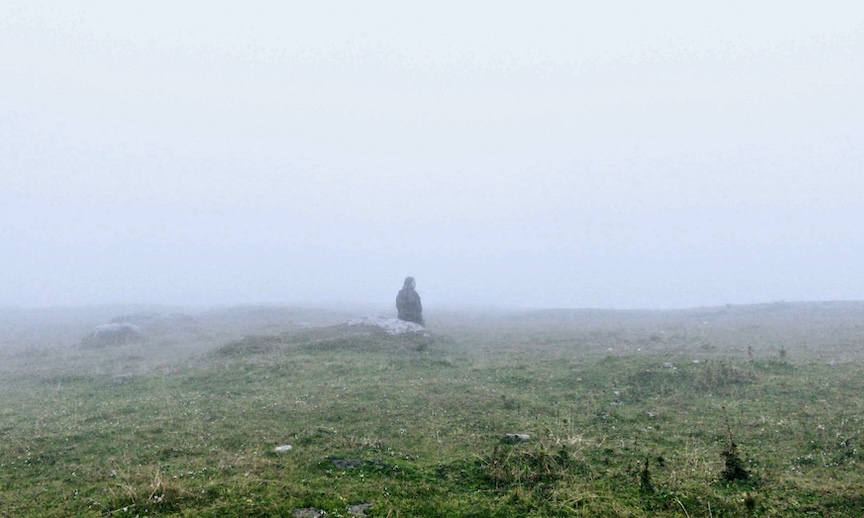
These are my foggy ideas right now, and we’ll talk about this or something like it this on Sunday, August 9, 10:00am at q-Staff Theatre. It’s awesome, all I don’t know. And I’m encouraged to think that maybe that’s big, wise leap into everything that we might create together. XO, Drew
©2026 Drew Groves

Related Posts